Following a migrating planet: the comoving framework
Why fixed simulation meshes lose track of migrating planets, and how solving hydrodynamics in a comoving frame speeds up long-range migration by more than an order of…
Nov 3, 2026
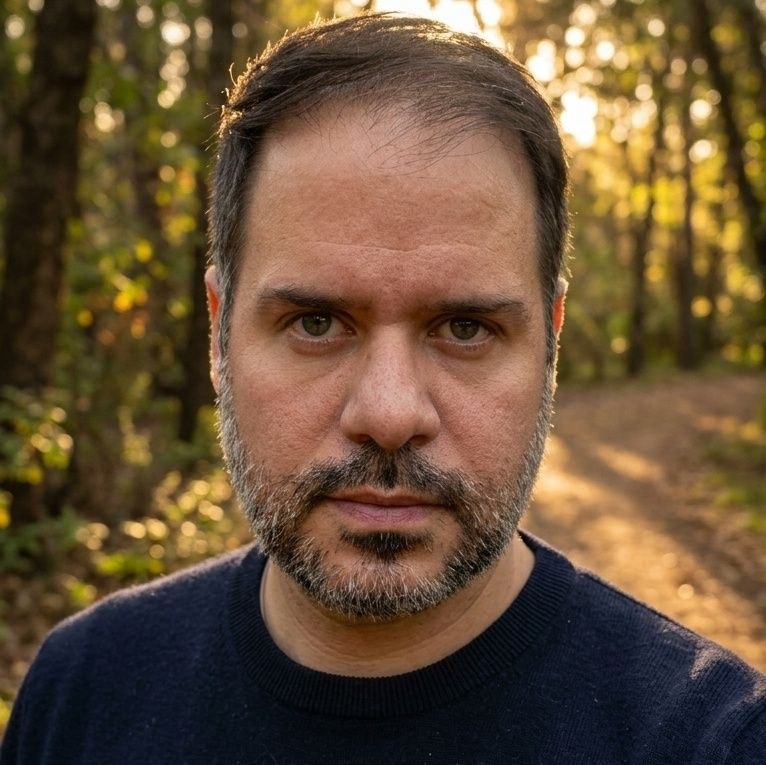
Astrophysicist · Associate Professor at Universidad Adolfo Ibáñez
I am an astrophysicist and Associate Professor in the Faculty of Engineering and Sciences at Universidad Adolfo Ibáñez in Santiago, Chile. My research focuses on theoretical and computational astrophysics—particularly planet–disk interactions, multi-fluid dust and gas dynamics in protoplanetary disks, astrophysical instabilities, and high-performance CPU/GPU numerical methods.
I am the main developer of the open-source CPU/GPU magnetohydrodynamics code FARGO3D, used for numerical simulations of protoplanetary disks and planet formation.
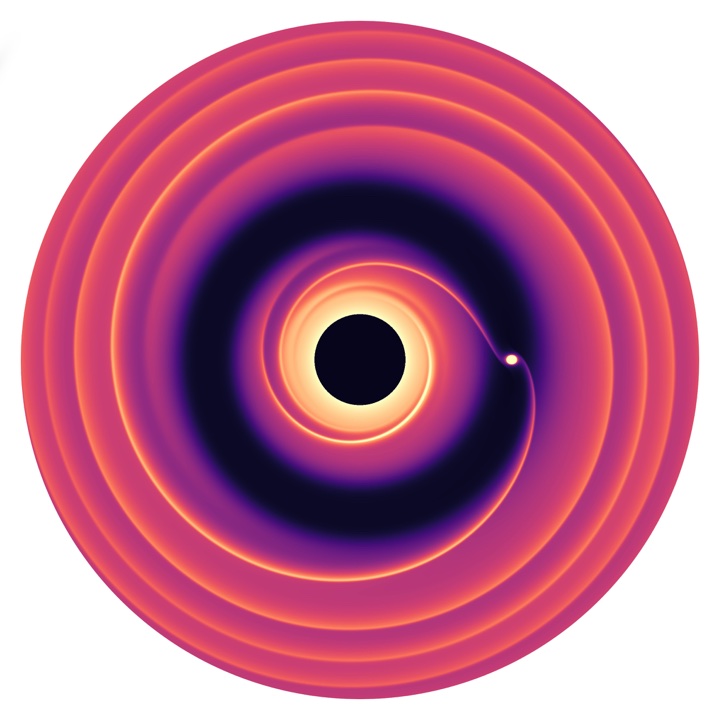
Understanding how young planets exchange angular momentum with their birth disks—through tidal, thermal, and co-orbital torques—to explain the observed diversity of exoplanet architectures.
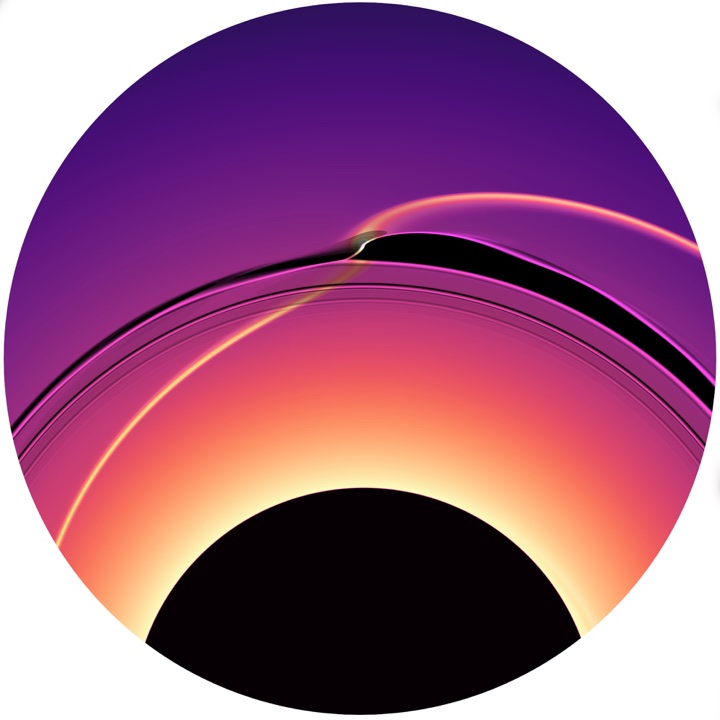
Studying how solid pebbles and dust grains respond to embedded planets, form rings and gaps, and exert dynamical torques on migrating planetary cores.
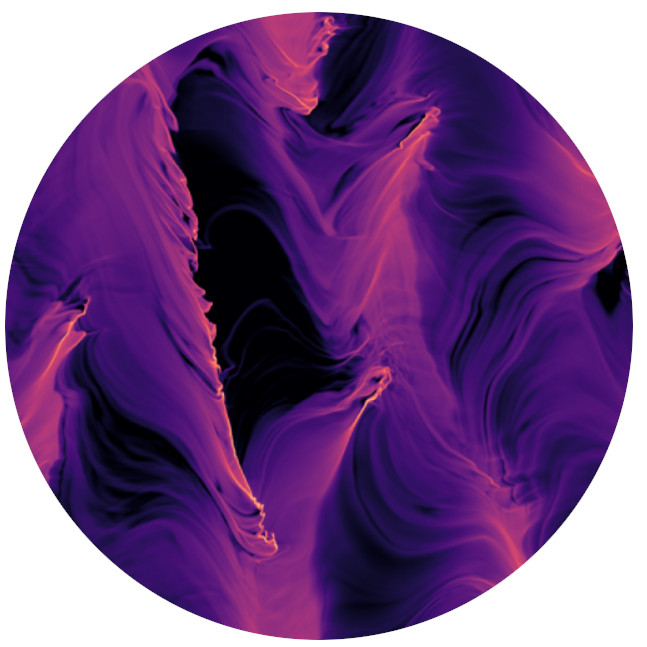
Investigating coupled gas–solid instabilities—such as the polydisperse streaming and dust-settling instabilities—to identify when and where solids concentrate into planetesimals.
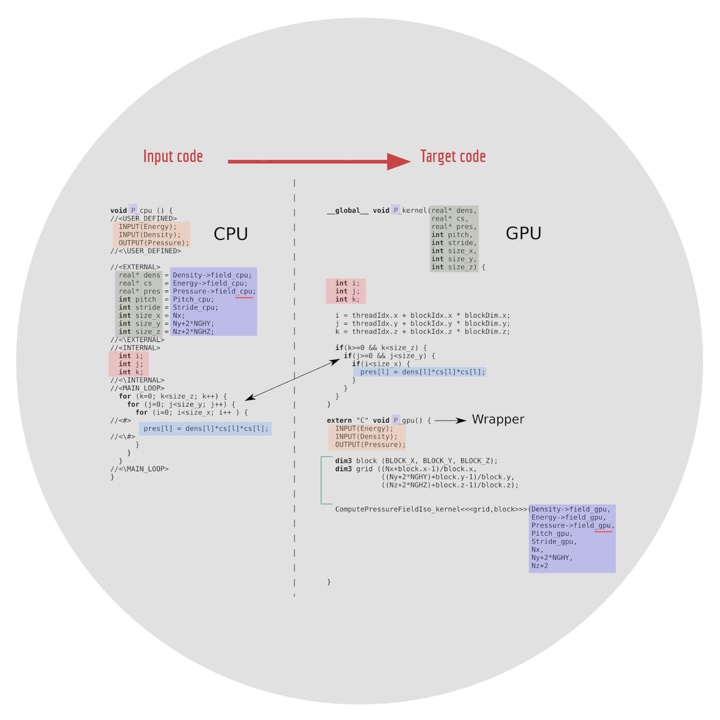
Designing scalable CPU/GPU numerical methods—from automatic C-to-CUDA translation and asymptotically stable multi-fluid drag solvers to arbitrary-mesh rapid advection and comoving frames.
Thermal torques · Nature 2015
Accretion luminosity from growing planetary cores warms nearby gas asymmetrically, generating a positive thermal torque that can slow, halt, or reverse inward Type I migration.
Open-source MHD code · ApJS 2016
A multi-fluid MHD code with orbital advection, N-body dynamics, and automatic C-to-CUDA translation for astrophysical fluid simulations.
Numerical methods · ApJS 2019
An asymptotically and unconditionally stable implicit solver for momentum transfer between \(N\) fully coupled fluids in FARGO3D, with an analytical \(O(N)\) gas–dust update derived later (Krapp & Benítez-Llambay 2020). Read the companion blog note.
Numerical methods · ApJ 2023
A conservative rapid advection algorithm using velocity splitting and mesh-density mappings to speed up calculations on non-uniform grids. Read the companion blog note.
Migration methods · ApJ 2026
A time-dependent coordinate scaling in FARGO3D that keeps migrating planets stationary on the grid for \(>10\times\) faster long-range migration runs. Read the companion blog note.
Dusty disk dynamics · ApJ 2026
Two-fluid comoving simulations led by PhD student José Gomez showing how coupled gas–dust feedback creates dynamical attractors that trap migrating super-Earths.
2022–Present — Associate Professor at Universidad Adolfo Ibáñez, Santiago (Faculty of Engineering and Sciences).
2020–2022 — Assistant Professor at NBIA, Copenhagen.
2019–2020 — Postdoctoral Researcher at NBIA, Copenhagen.
2017–2019 — Marie Curie Fellow at NBIA, Copenhagen.
2016–2017 — Postdoctoral Researcher at NBIA, Copenhagen.
Dec 2015 — PhD from Universidad Nacional de Córdoba (IATE, Argentina), studying planet–disk interactions and numerical magnetohydrodynamics, during which I began developing the CPU/GPU MHD parallel code FARGO3D.
2012–2017 — Assistant Professor at Universidad Nacional de Córdoba.
March 2011 — Degree from FaMAF, Universidad Nacional de Córdoba, studying planet–disk and planet–star tidal forces.
I supervise undergraduate, MSc, and PhD students (on-site or remotely) and welcome applications for FONDECYT Postdoctoral Fellowships in numerical astrophysics and planet formation.
Open calls & opportunities Contact me